
In today’s changing regulatory climate, VAT compliance in the UAE has become a top priority for all business leaders. Since the advent of Value Added Tax in 2018, businesses across industries have been pushed to keep correct financial records, stay current on changing tax legislation, and respond rapidly to Federal Tax Authority (FTA) audits. For forward-thinking CEOs, contemporary ERP (Enterprise Resource Planning) systems have emerged as a transformative option for smoothly managing VAT, reducing errors, and ensuring complete compliance. Enterprise resource planning (ERP) programs are no longer just accounting tools; they are strategic compliance engines that integrate tax management into all levels of business operations. From real-time VAT tracking to automated FTA reports, current ERP platforms enable CFOs and CEOs to take control of tax operations while maintaining operational efficiency. A Unified Platform for Tax Confidence Most firms struggle with VAT due to fragmented data, disconnected technology, and manual processes that allow for errors. By establishing a centralised tax environment where each transaction is automatically labelled, computed, and recorded in accordance with UAE VAT legislation, ERP solutions address this difficulty. Here’s how ERP software facilitates VAT compliance: Automated VAT computations for all sales, purchases, and reverse-charge transactions. FTA-compliant invoice production and real-time financial posting. VAT returns can be generated on a schedule and filed electronically. Integrated inventory, procurement, and accounts payable systems to accurately track input/output VAT. This integrated approach avoids duplication, lowers human input, and keeps your VAT records up to date and audit-ready. VAT Insights That Drive Smarter Decisions ERP systems provide the financial visibility required to plan, optimise, and expand, in addition to assisting with compliance. With built-in dashboards and analytics, executives can see tax liabilities, reclaimable VAT, and cash flow positions in real time, allowing them to make better decisions with less risk. For example: Identify financial leaks via automatic VAT reconciliation. Monitor VAT fluctuations over time to manage your spending and pricing initiatives. Align procurement decisions with the VAT input benefits. Adjust sales strategy according to the VAT impact by location or product. These capabilities enable corporate executives to transform compliance into a competitive advantage, enabling for confident, data-driven leadership. Scaling with Confidence in a Regulated Market As your company grows—by opening additional branches, offering new goods, or expanding throughout the GCC—the complexity of VAT increases. The correct ERP system ensures that growth does not come with additional risks. ERP platforms can scale with your organisation thanks to built-in compliance tools, multi-location administration, and regulatory updates. Key features for expanding businesses include: VAT administration across several companies and currencies. Support for the GCC Unified VAT Agreement regulations. Dynamic reporting tools for cross-border transactions. Audit log tracking and safe record keeping. ERP solutions safeguard your company from costly errors and penalties for noncompliance by reducing manual procedures and boosting traceability. ERP: The Backbone of Digital Compliance Strategy Compliance nowadays is more than just filling out forms; it is about developing resilience, trust, and operational discipline. ERP systems play an important role in this transition by providing: End-to-end data security and encryption for sensitive financial information. Automated role-based access to safeguard tax records. Scheduled data backups and disaster recovery are used to assure continuity. UAE regulatory changes are delivered automatically via cloud-based platforms. This makes ERP a compliance foundation that all contemporary UAE businesses can rely on, not merely a financial tool. Final Thoughts: Leading with Confidence in the UAE Tax Landscape The UAE’s VAT system is here to stay, and it is only becoming more complex. For CEOs, CFOs, and other financial leaders, the question is not whether to adopt an ERP system, but which one will best support compliance, scalability, and profit. The right ERP software relieves stress around tax deadlines, enables for faster decision-making, and equips your firm to thrive in a complex regulatory environment. By choosing a VAT-compliant ERP solution, you not only optimize accounting procedures, but also safeguard your company’s future, reputation, and competitive advantage in the UAE market.
Tag: ERP Solutions
AI and ERP: What UAE Businesses Can Expect in the Next 5 Years

Enterprise Resource Planning (ERP) software has been an innovative tool for UAE companies to manage operations, eradicate inefficiencies, and maintain compliance for years. The next significant change in ERP, though, is already in progress through the power of artificial intelligence. ERP systems in the future will go beyond process automation to deliver real-time analysis, pattern recognition, and adaptive workflows that will be embedded in fundamental functions, not as an afterthought, but as a built-in layer that enables businesses to respond more quickly, make better allocation of resources, and minimize operational friction. For businesses throughout Dubai, Abu Dhabi, and the broader Emirates, this change isn’t about keeping up with the latest trends. It’s about being ready to adapt in a region that is increasingly digitising, where speed and efficiency are no longer luxuries. This piece delves into how AI-driven ERP software and cloud ERP software adoption will transform business processes within the next five years—and what executives can do immediately to get ahead. 1. Smarter Decision-Making with Real-Time Insights Most conventional ERP software can accumulate and categorize data, but depend on users to make sense of it. AI alters that. An AI driven ERP software can examine patterns in your finances, sales, stock, and operations—then provide real-time suggestions or notifications. For instance: A Dubai retail firm might be given a seasonally driven AI-based prediction of stock deficits by analyzing demand, delayed shipments, and current sales patterns. A construction company in Abu Dhabi may receive advance warning of overruns on the budget from a project’s burn rate. Such insight is not only beneficial. It can be the difference between being late to react and being early to act. What this implies for UAE companies: As competition increases and margins narrow, speedier, more intelligent decisions are a necessity. ERP AI can leverage data to drive action—no in-house data science team required. 2. AI-Powered Automation for Daily Tasks Manual activities such as invoice matching, data entry, or expense approval are error-prone and time-consuming. In the next five years, ERP software powered by AI will highly automate them with machine learning and natural language processing. Some key automation examples are: Auto-coding expenses from the content of emails and vendor behavior Smart document recognition of scanned invoices Smart approval workflows based on transaction history and employee job role This not only saves time. It reduces errors, improves compliance, and enables teams to do more high-value work. Why it matters for the UAE: Most of the UAE companies tend to use manual accounting and operations. As the labour cost and pressure for efficiency increase, automation becomes a priority. 3. Enhanced Customer Experience Through Personalization ERP systems are no longer an internal matter. In sectors such as retail, hospitality, and services, they have a direct bearing on the customer experience. AI will enable companies to tailor everything from offers to service quality. Consider an ERP system that: Recommends personalized product bundles to repeat customers Prioritizes service tickets automatically with sentiment analysis Identifies clients at risk of churning before they do AI can look across customer interactions on multiple platforms and provide actionable suggestions to sales and service teams. For UAE companies: In an experience-is-everything, customer-centric market like Dubai, where price isn’t as important as experience, personalization is what sets winners apart. With AI, companies can give each customer VIP-like treatment—without micromanaging every interaction. 4. Predictive Maintenance and Asset Optimization In manufacturing, construction, or logistics, equipment downtime translates into lost revenues. AI-powered ERP can track sensors, machine history, and usage patterns to forecast breakdowns ahead of time. Advantages are: Less downtime due to planned maintenance Improved asset lifecycle management Lower operational risk and expenditure This is particularly relevant to UAE businesses operating fleets, heavy equipment, or large infrastructure. How it benefits: With the increasing drive towards Industry 4.0 and smart cities, predictive maintenance will be a keystone of operational effectiveness throughout the Emirates. 5. Seamless Integration with Cloud ERP Platforms AI features are being embedded more and more into Dubai cloud ERP software, which makes them affordable for mid-sized and expanding companies. Unlike on-premise ERPs, cloud-based ERPs can deploy AI features more quickly and economically. AI requires data—and cloud ERP provides consistent, real-time data from all departments. Together, this is a potent foundation for intelligent automation, predictive analytics, and responsive reporting. UAE relevance: With businesses shifting away from legacy systems, adoption of cloud in the UAE is gaining speed. Government-supported digital transformation programs within the Emirates are also compelling companies towards secure, cloud-first approaches. 6. Smarter Compliance and Risk Management The UAE has a fast-changing regulatory environment—from VAT to Emiratization needs to cybersecurity regulations. AI in ERP can help companies remain compliant by: Flagging out-of-the ordinary transactions Real-time monitoring of policy violations Guiding corrective actions in accordance with regulations This will be particularly critical for businesses dealing across borders or industries such as finance, healthcare, and logistics. What to anticipate: Compliance will cease to be an after-the-fact process. AI will allow businesses to preemptively address risk and minimize exposure before problems arise. How UAE Businesses Can Prepare Now AI and ERP are no longer two different conversations. They are already converging rapidly. UAE organizations who desire to remain at the forefront must move quickly. Here’s how: Move to cloud ERP: If you’re still on an old system, begin comparing cloud ERP software in Dubai that’s AI-enabled. Clean your data: AI is no better than the data it’s trained on. Take time to clean and consolidate your internal databases. Keep it scalable: Select an ERP platform where you can add AI capabilities incrementally—without re-architecting your whole system. Choose the right partner: Engage ERP vendors in the UAE that provide AI-driven modules and are familiar with local business requirements. Final Thoughts The future of ERP will be smart, predictive, and automated. In the next… Continue reading AI and ERP: What UAE Businesses Can Expect in the Next 5 Years
Avoid These 7 ERP Pitfalls UAE Companies Commonly Face

As we know, UAE is the ultimate business hub and for most UAE businesses, ERP software plays a vital role. From retail chains to logistics companies, businesses use ERP to operate, optimize workflows, and facilitate expansion and success. But even the best ERP software can fail if it’s poorly implemented or doesn’t fit your business needs. ERP systems touch almost all aspects of a business, specifically finance, HR, inventory, procurement, and beyond. So when something fails, everything else gets impacted. Many companies in the UAE face similar issues when adopting ERP, often due to quick decisions, unplanned priorities, or choosing the wrong partner. Here are the seven most common ERP pitfalls UAE companies should avoid—and how to get it right the first time. 1. Choosing an ERP That Doesn’t Align With the UAE Market Many UAE businesses select global ERP offerings that are not suitable for regional needs. The solutions are hugely successful worldwide, but lack in terms of: Arabic-English bilingual billing UAE VAT compliance Local WPS and payroll requirements Fiscal year alignment Integration with government portals This results in workarounds, compliance risks, and expensive changes after implementation. What to do: Select the top ERP software designed for the GCC market. Look for VAT-ready modules, bilingual support, and UAE payroll and HR law compliance. A customer-centric ERP vendor in Dubai will know these specifications and deliver customized solutions straight out of the box. 2. Over-Customization That Slows You Down Customization is a great idea—until it’s the reason that your system is unstable or obsolete. Too much customization breeds a brittle ERP platform. Each update is a gamble, and each modification takes longer than it needs to. In the high-pace industries of the UAE, this can keep you behind in responding to market shifts or regulatory changes. What to do: Find an ERP that addresses most of your requirements out of the box. Employ configuration in lieu of excessive customization. The best systems have industry-specialized modules that can be tweaked with a minimum of effort. Keep custom work limited to areas where it directly supports business value. 3. Neglecting Proper User Training ERP software is strong, but only if your employees are aware of how to utilize it. One of the key reasons ERP implementations fail in the UAE is due to low user adoption. Employees might stick to using spreadsheets or do things by hand just because they were not instructed correctly. This problem is particularly prevalent in businesses with multilingual, multicultural staff. What to do: Invest in formal training.. Offer sessions for each department and ensure materials are accessible in both English and Arabic if needed. A customer-focused ERP provider in Dubai will include onboarding, user manuals, and ongoing support as part of the implementation. 4. Poor Data Migration Planning Transferring old data into a new ERP is more complicated than it seems. Many companies fasten this step only to discover that duplicate records, missing data, or misaligned formats have disrupted the entire system. ERP reports are only as good as the data you feed them. Dirty data means bad decisions. What to do: Put data prep ahead of migration. Eliminate duplicates, validate input, and test in small batches before going live. Work with your ERP partner to complete the decision on what sets of data are worth importing and what are best left archived. 5. Treating ERP as a Technical Project Only ERP is not an IT project; it’s a business transformation. When IT alone is left to make decisions, the outcome tends to be a system that appears impressive on paper but not helpful in daily operations. Each department needs to participate, particularly finance, HR, and operations. What to do: Establish a cross-functional ERP team at the outset. Establish business objectives and utilize them to drive system requirements. If your goal is to decrease waste in inventory, enhance reporting accuracy, or automate procurement, that should be evident in your ERP. Don’t let IT decide things alone. 6. Picking the Wrong ERP Partner Your ERP partner will shape the success—or failure—of your entire project.Most UAE businesses hire generic resellers or foreign consultants who are unfamiliar with local requirements. Thus, they get poor support and are left with a half-functional system. What to do: Select a Dubai-based customer-centric ERP supplier with local credentials. They must be familiar with VAT, WPS, Arabic invoicing, and other compliance requirements. A reliable partner provides training, support, and tailoring in a long-term perspective—not a temporary plug-and-play setup. 7. Ignoring Change Management ERP systems transform the way individuals work. With poor communication, users can resist new working processes or resort to existing techniques. In most UAE organizations, particularly those with veteran employees, this resistance poses a genuine problem. What to do: Begin change management early. Communicate benefits of the system to all users, not only management. Give timelines, check-in points, and feedback opportunities. Celebrate small wins and facilitate transition. Final Thoughts: Make ERP a Strategic Asset, Not a Headache ERP is perhaps the most crucial investment your business can undertake. Done well, it will consolidate your systems, enhance efficiency, and facilitate growth. Done badly, it will bleed resources, infuriate staff, and set you back. Steering clear of these seven pitfalls is step one. Selecting the best ERP software designed for the UAE market is step two. And having a customer-focused ERP supplier in Dubai like Axolon ERP who really knows your business requirements is what holds it all together.
ERP: The Secret Decision-Making Weapon of Successful CEOs in Dubai

In Dubai’s fast-paced business world, CEOs need more than intuition to stay ahead—they need data-driven insights, streamlined operations, and real-time decision-making capabilities. This is where ERP software becomes their most powerful tool. From optimizing financial management to enhancing customer experiences, ERP solutions in the UAE are transforming how top executives lead their businesses. Successful CEOs in Dubai leverage ERP software for efficiency and as a strategic advantage in scaling operations, improving profitability, and staying competitive in a rapidly evolving market. How ERP Software Empowers CEO Decision-Making Gone are the days when business leaders relied on scattered reports and manual data entries. Modern ERP solutions in Dubai provide CEOs with a 360-degree business view, enabling them to: Make real-time, data-driven decisions instead of relying on guesswork. Monitor key performance indicators (KPIs) for finance, operations, and sales. Identify inefficiencies and cost-saving opportunities within supply chains. Respond to market trends and customer demands with agility. By consolidating all business functions into a single, centralized platform, ERP software in UAE enables CEOs to anticipate challenges, capitalize on opportunities, and scale their businesses efficiently. ERP and Financial Intelligence: Maximizing Profitability Dubai’s dynamic business environment demands precise financial management. ERP software allows CEOs to gain financial visibility and control over expenditures by: Automating budgeting, forecasting, and expense tracking. Providing real-time cash flow analysis to prevent financial bottlenecks. Generating customized financial reports for informed strategic planning. Ensuring compliance with UAE tax laws and VAT regulations. With ERP solutions in UAE, CEOs no longer rely on fragmented spreadsheets or delayed reports. Instead, they have instant access to financial insights, ensuring that every investment and decision is backed by data. Why Dubai’s CEOs Rely on ERP for Business Expansion Dubai’s business landscape is marked by rapid growth and international trade. Expanding successfully requires seamless scalability and operational efficiency, both of which ERP software provides. Multi-location management: CEOs can oversee multiple branches and operations in different regions. Cross-border trade facilitation: ERP solutions integrate with international suppliers, logistics providers, and banking systems. Regulatory compliance: Ensures businesses adhere to Dubai’s trade policies and industry standards. Whether scaling into new markets, launching new products, or diversifying revenue streams, ERP software in Dubai provides a stable foundation for long-term growth. ERP’s Role in Customer-Centric Leadership In today’s competitive landscape, customer satisfaction is non-negotiable. Dubai’s leading CEOs understand that an ERP-powered business delivers better customer experiences through: Automated CRM integration: Centralized customer data for personalized marketing. Optimized supply chain management: Faster order fulfillment and on-time deliveries. AI-driven customer insights: Predicting buying behaviors and demand trends. Seamless e-commerce integrations: Connecting online platforms with inventory and sales data. By leveraging ERP solutions in the UAE, CEOs ensure that customer experience remains a top priority, leading to higher retention rates and increased brand loyalty. Data Security and Risk Management: A CEO’s Top Priority With digital transformation comes the risk of cybersecurity threats and data breaches. CEOs in Dubai must prioritize ERP solutions with robust security features, including: End-to-end encryption to protect sensitive financial and customer data. Role-based access control to limit unauthorized access to key information. Automated backups and disaster recovery plans for business continuity. Compliance with UAE’s data protection laws to avoid legal penalties. A secure ERP system ensures that CEOs can make decisions with confidence, knowing their business-critical data is well-protected. The Competitive Edge: Choosing the Right ERP for Your Business Not all ERP solutions are built the same. Successful CEOs in Dubai focus on selecting ERP software that aligns with their industry, business size, and long-term vision. Key factors to consider: Cloud vs. On-Premise ERP: Cloud ERP offers flexibility, while on-premise solutions provide data control. Industry-Specific Features: Tailored ERP solutions for retail, construction, healthcare, etc. Scalability and Customization: Ability to grow alongside the business. Vendor Reputation and Local Support: Trusted ERP providers in UAE with strong after-sales service. Choosing the right ERP software isn’t just a tech decision—it’s a leadership decision that impacts a company’s growth and success. Why Every CEO in Dubai Needs an ERP Strategy ERP software in UAE is no longer just a back-office tool—it’s a strategic weapon that drives business success. Dubai’s most successful CEOs leverage ERP solutions to: Gain real-time business intelligence for better decision-making. Optimize financial performance and maximize profitability. Streamline operations and scale efficiently in a competitive market. Enhance customer experience and brand loyalty through automation and AI. As Dubai’s business environment continues to evolve, CEOs who embrace ERP software will remain ahead of the curve, making smarter, faster, and more impactful decisions. The question is no longer whether a CEO should invest in ERP—it’s how soon they can integrate it into their leadership strategy.
2025 ERP Vendor Selection Guide: Choose the Right Software

In 2025, businesses increasingly turn to ERP software to streamline operations, enhance productivity, and make data-driven decisions. However, with hundreds of ERP vendors in the market, selecting the right one can be overwhelming. The right ERP solution can help businesses in UAE and Dubai improve efficiency, reduce costs, and scale operations. However, making the wrong choice can lead to implementation failures and unnecessary expenses. This guide will help you navigate the ERP vendor selection process and choose the ideal solution for your business. One of the leading names in the market is Axolon ERP Software, known for its customizable features and robust support system. 1. Understanding Your Business Needs Before Selecting an ERP Before diving into vendor options, it’s essential to identify your business goals and pain points. Ask yourself: Do you need cloud-based ERP software or on-premise solutions? Are you looking for ERP solutions tailored to manufacturing, retail, or construction? Do you require localized features like VAT compliance and multi-currency support, which are crucial for businesses in UAE and Dubai? Understanding your unique business needs will help you shortlist vendors that offer the right functionalities and customization options. Axolon ERP Software is designed to adapt to different industries, offering flexibility and scalability to meet diverse business requirements. 2. Comparing ERP Features and Functionalities Not all ERP systems offer the same capabilities. When evaluating vendors, focus on the core features that align with your business processes. Key features to look for include: Inventory and supply chain management Financial reporting and budgeting tools CRM and customer support modules Real-time data analytics and dashboards For businesses in Dubai and UAE, ERP solutions that offer regional tax compliance, Arabic language support, and integration with local banking systems are critical for smooth operations. Axolon ERP excels in localization and VAT compliance, making it a preferred choice for businesses operating in the region. 3. Evaluating Vendor Reputation and Industry Expertise Choosing an ERP vendor with experience in your industry is essential for successful implementation. What to assess: How long has the vendor been in the market? Do they have successful ERP implementations in UAE and Dubai? Are there positive customer reviews and case studies? A reliable ERP vendor with a proven track record will understand industry-specific challenges and offer tailored solutions that fit your business model. Axolon ERP Software has helped hundreds of businesses in the UAE and Dubaiachieve seamless automation and improved productivity. 4. Assessing ERP Integration Capabilities Your ERP system should seamlessly integrate with your existing tools, such as CRM, accounting software, and inventory management platforms. Key factors to consider: API compatibility for smooth data exchange. Support for third-party app integrations. Flexibility to connect with e-commerce platforms, payment gateways, and logistics systems. In UAE and Dubai, businesses often require ERP systems that can integrate with local government portals and VAT compliance platforms, making integration capabilities a top priority. Axolon ERP stands out for its easy integration with other business management tools, ensuring smooth data flow across departments. 5. Considering Cloud vs. On-Premise ERP Solutions Choosing between cloud-based ERP and on-premise ERP software is a critical decision that affects cost, scalability, and security. Cloud ERP solutions offer low upfront costs, remote accessibility, and automatic updates, making them ideal for growing businesses in the UAE and Dubai. On-premise ERP systems provide greater control over data and customization but require higher maintenance costs and dedicated IT infrastructure. Businesses aiming for flexibility and scalability are increasingly adopting cloud ERP solutions in Dubai, especially for industries like retail, logistics, and construction. Axolon ERP Software offers cloud and on-premise solutions, allowing businesses to choose based on their unique operational needs. 6. Checking Vendor Support and Training Services A successful ERP implementation depends heavily on ongoing support and training from the vendor. When evaluating ERP vendors, consider: 24/7 customer support and technical assistance. Availability of training programs and user guides for employees. Access to local support teams in UAE and Dubai for quick issue resolution. Without proper training and support, even the most advanced ERP software can lead to low employee adoption and costly implementation failures. Axolon ERP is known for its dedicated customer support team and comprehensive training programs, ensuring a smooth transition for businesses. 7. Analyzing Cost and ROI of ERP Implementation ERP implementation is a long-term investment, so understanding the total cost of ownership (TCO) and potential Return on Investment (ROI) is crucial. Key costs to assess: Initial software licensing fees Customization and integration costs Ongoing maintenance and upgrade expenses In UAE and Dubai, businesses often look for affordable cloud ERP solutions that reduce IT infrastructure costs while boosting productivity and profitability. Axolon ERP Software offers cost-effective solutions with customizable pricing plans, helping businesses maximize ROI. 8. Verifying Data Security and Compliance Standards With cybersecurity threats on the rise, ensuring that your ERP system meets data protection regulations is essential. Key security features to look for: Data encryption and user access controls Regular backups and disaster recovery options Compliance with UAE’s data protection laws and international standards like GDPR ERP software in UAE and Dubai must also comply with local VAT regulations, making security and compliance a top priority for businesses in the region. Axolon ERP ensures secure data handling and adheres to local compliance standards, providing peace of mind for businesses. Selecting the right ERP vendor in 2025 requires careful evaluation of business needs, features, scalability, and security standards. By following this guide, businesses in UAE and Dubai can make an informed decision and implement an ERP solution that boosts productivity and drives long-term growth. With Axolon ERP Software, companies gain access to a powerful, flexible, and locally compliant solution, ensuring smooth business operations and future scalability.
ERP in Unusual Industries: Surprising Use Cases You Didn’t Expect

Enterprise Resource Planning (ERP) software is often associated with industries like manufacturing, retail, and finance. However, its ability to streamline operations, enhance decision-making, and optimize resource management has led to its adoption in some unexpected sectors. From fine arts to space exploration, ERP solutions are helping businesses in unconventional industries achieve efficiency, transparency, and scalability. As businesses in the UAE and Dubai continue to diversify, ERP adoption is extending into niche markets that require complex data management and operational efficiency. Below are some of the most surprising industries that have embraced ERP solutions to revolutionize their workflows. 1. ERP in the Fine Arts and Auction Industry The art world relies heavily on accurate inventory management, valuation tracking, and secure transactions. ERP software helps galleries, museums, and auction houses maintain detailed records of artwork provenance, condition reports, and buyer history. For example, ERP solutions can automate bidding management in auction houses, ensuring that real-time valuations are recorded and transactions are completed securely. In Dubai, where the art market is rapidly growing, ERP software assists collectors, curators, and galleries in digitizing their operations, providing a centralized system for authentication and secure financial transactions. 2. ERP in the Film and Entertainment Industry Film and entertainment productions involve complex budgeting, scheduling, and resource allocation. ERP software helps streamline pre-production, filming, and post-production workflows by integrating financial management, crew scheduling, and content rights tracking. For instance, ERP enables studios to manage contracts, monitor filming expenses, and optimize production timelines. Large-scale film festivals and entertainment companies in the UAE and Dubai rely on ERP solutions to coordinate logistics, vendor payments, and licensing agreements, ensuring that productions stay on schedule and within budget. 3. ERP for Space Exploration and Aerospace Research The aerospace and space exploration industries require extreme precision, strict compliance tracking, and advanced resource management. ERP software assists in monitoring mission-critical data, component lifecycles, and launch schedules. For example, ERP solutions help aerospace firms manage supply chains for rocket parts, track research data, and comply with international safety regulations. With Dubai investing in space exploration through initiatives like the UAE Space Agency and the Mars 2117 project, ERP systems are crucial in managing complex aerospace projects and ensuring seamless coordination between scientists, engineers, and suppliers. 4. ERP in the Agriculture and Vertical Farming Sector Agriculture has become increasingly data-driven, with ERP solutions helping farmers optimize crop yields, monitor soil quality, and track supply chains. Vertical farming, which is gaining traction in UAE and Dubai due to limited arable land, benefits from ERP software that manages irrigation systems, climate control, and inventory tracking. For instance, ERP systems can integrate with IoT sensors to provide real-time analytics on plant growth conditions, ensuring that resources like water and nutrients are used efficiently. By implementing ERP, agritech firms can enhance productivity, minimize waste, and create sustainable food production models in urban environments. 5. ERP in the Luxury Fashion and Jewelry Industry The luxury fashion and jewelry industries require precise inventory management, tracking of high-value materials, and seamless global supply chain coordination. ERP software helps brands manage everything from raw material sourcing to final product distribution. For example, ERP systems can track gemstones from mine to market, ensuring authenticity and ethical sourcing. Additionally, blockchain-enabled ERP solutions help prevent counterfeiting by providing traceability for high-end fashion items. In the UAE and Dubai, where luxury brands dominate the retail market, ERP solutions are critical for optimizing production, monitoring inventory, and personalizing customer experiences. 6. ERP in the Pet Care and Veterinary Industry The pet care industry, including veterinary clinics, pet hotels, and grooming services, relies on efficient scheduling, inventory tracking, and customer management. ERP software streamlines these processes by integrating pet medical records, appointment scheduling, and supply chain logistics for pet food and medications. For example, ERP systems can automate vaccine reminders for pet owners, track pet health histories, and manage grooming service bookings. In rapidly growing pet care markets like Dubai, ERP solutions are enhancing customer engagement, improving operational efficiency, and ensuring compliance with pet health regulations. 7. ERP in the Music and Live Events Industry Music festivals, concerts, and large-scale live events involve intricate planning, multiple stakeholders, and strict budget controls. ERP software simplifies event management by integrating ticket sales, artist contracts, venue logistics, and marketing campaigns into a single platform. For instance, an ERP system can help event organizers in the UAE manage performer schedules, coordinate travel and accommodation, and track merchandise sales. With Dubai hosting major entertainment events and corporate conferences, ERP solutions play a key role in ensuring smooth event execution, cost control, and real-time financial tracking. 8. ERP in the Nonprofit and Charity Sector Nonprofits and charities operate on tight budgets, requiring efficient fund management, donor tracking, and volunteer coordination. ERP software helps organizations maintain transparency by automating financial reporting, monitoring donation flows, and tracking project outcomes. For example, ERP solutions can generate reports on how funds are allocated, ensuring accountability and regulatory compliance. Many charitable organizations in Dubai and the UAE leverage ERP software to manage large-scale fundraising campaigns, donor databases, and impact assessments, helping them maximize resources and achieve their missions effectively. ERP software is far more versatile than many realize, extending beyond traditional industries into unexpected sectors like fine arts, space exploration, and luxury fashion. Businesses across the UAE and Dubai are increasingly adopting ERP solutions to streamline operations, enhance efficiency, and drive innovation in their respective fields. By integrating ERP systems, organizations in unusual industries can gain better control over their processes, improve decision-making, and ensure sustainable growth. As technology continues to evolve, ERP will likely find even more surprising applications, redefining how industries manage their operations and resources.
Bridging the On-Site and Office Gap: How ERP is Revolutionizing Field Reporting in Construction
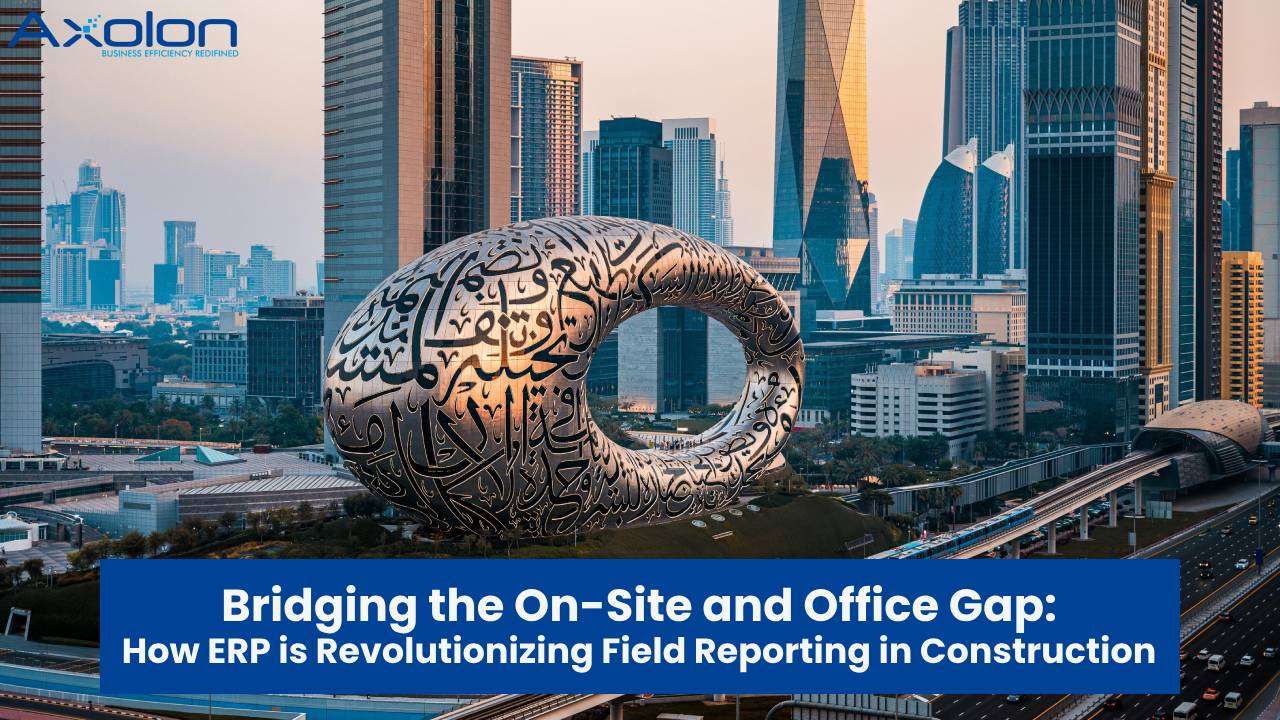
Construction projects require seamless coordination between on-site teams and office staff, but communication breakdowns and reporting delays often create inefficiencies. Traditional methods of field reporting—manual logs, paper-based forms, and disconnected spreadsheets—result in data discrepancies, delayed decision-making, and project overruns. ERP (Enterprise Resource Planning) software transforms field reporting by providing real-time data access, automating documentation, and improving collaboration. With cloud-based and mobile-friendly ERP solutions, construction firms can streamline on-site reporting, enhance compliance, and optimize project management. In high-growth regions like the UAE and Dubai, where large-scale construction projects demand precision, ERP is proving to be a game-changer. 1. Real-Time Data Capture for On-Site Reporting One of the biggest challenges in construction is the lag between field data collection and office analysis. ERP software eliminates this delay by enabling on-site workers to log updates, report incidents, and track progress in real-time. Mobile ERP applications allow field personnel to capture and upload data directly from the construction site. For example, workers can record material deliveries, log safety incidents, or update work completion statuses instantly through ERP mobile apps. This real-time data flow ensures project managers have an accurate view of site activities, reducing delays and improving overall efficiency. 2. Enhancing Communication Between Field and Office Teams A lack of synchronized communication between on-site teams and office staff can lead to costly misunderstandings. ERP software bridges this gap by providing a centralized platform where all project data, reports, and updates are accessible in real-time. For instance, if an unexpected issue arises on-site, such as equipment failure or material shortages, the field team can update the ERP system immediately. Project managers in the office can then take prompt action, whether by reallocating resources or ordering replacements. ERP solutions in UAE and Dubai, where construction projects operate on tight deadlines, are particularly beneficial in improving workflow coordination and minimizing disruptions. 3. Automating Compliance and Safety Reporting Construction firms must comply with strict safety regulations, and manually tracking compliance can be time-consuming and error-prone. ERP software automates safety reporting by generating incident logs, tracking compliance deadlines, and storing digital copies of permits and inspection reports. For example, an ERP system can send automated alerts for upcoming safety inspections or flag incomplete compliance checklists. This reduces the risk of regulatory violations and ensures firms meet legal requirements without relying on manual documentation. With ERP solutions, companies can maintain accurate safety records while focusing on on-site productivity. 4. Improving Resource and Equipment Tracking Efficient resource management is critical to keeping construction projects on schedule. ERP software provides real-time tracking of equipment, materials, and workforce allocation, ensuring optimal utilization. For instance, if a construction company in Dubai is working on multiple projects simultaneously, an ERP system can help track which equipment is being used at each site. If a machine is sitting idle at one location, it can be reassigned to another project where it’s needed. This prevents resource shortages and reduces unnecessary rental costs. Additionally, ERP systems monitor maintenance schedules, ensuring are serviced on time to prevent breakdowns. 5. Standardizing Reporting for Consistency and Accuracy Field reports often vary in format, leading to inconsistencies that make it difficult for office teams to analyze data effectively. ERP software ensures uniformity by standardizing reporting templates and automating data entry, reducing human errors. For example, an ERP system can generate digital forms for daily progress updates, safety checklists, and inventory logs, ensuring all field data is recorded in a structured format. This standardization improves data accuracy, making it easier for project managers to track performance, forecast costs, and make informed decisions. 6. Integrating AI and IoT for Smart Field Reporting The integration of Artificial Intelligence (AI) and the Internet of Things (IoT) with ERP is taking field reporting to the next level. IoT-enabled sensors can monitor equipment performance, environmental conditions, and worker productivity, feeding real-time data directly into the ERP system. AI-powered analytics then interpret this data to identify inefficiencies and predict potential project risks. For example, an IoT sensor installed on construction machinery can send maintenance alerts when performance drops, preventing unexpected breakdowns. Similarly, AI-driven ERP systems can analyze historical project data to detect patterns that indicate potential delays, allowing managers to take proactive measures. By leveraging AI and IoT, construction firms can enhance field reporting and optimize project outcomes. 7. Enhancing Decision-Making with Real-Time Dashboards Making informed decisions requires access to real-time data, and ERP software provides intuitive dashboards that consolidate key performance indicators (KPIs). These dashboards give project managers instant visibility into labor productivity, material usage, and financial performance. For example, if material costs exceed budget projections, an ERP dashboard can flag the discrepancy, allowing finance teams to take corrective action. Likewise, if workforce productivity declines, project managers can investigate and reallocate resources to maintain project timelines. ERP solutions in UAE and Dubai are valuable in helping construction firms manage large-scale projects efficiently by offering real-time insights. 8. Future Trends: The Evolving Role of ERP in Construction Field Reporting The future of ERP in construction will be shaped by emerging technologies such as Augmented Reality (AR), blockchain, and 5G connectivity. AR-powered ERP solutions will enable remote site inspections, allowing project managers to assess progress without being physically present. Blockchain integration will enhance data security, ensuring that field reports remain tamper-proof and verifiable. Meanwhile, 5G will enable even faster data transmission, closing the gap between on-site teams and office staff. As construction projects grow in complexity, ERP systems will evolve to provide even greater efficiency and automation. Companies that invest in advanced ERP solutions today will be better positioned to adapt to industry shifts and maintain a competitive edge in the future. The disconnect between on-site teams and office staff has long been a challenge in construction project management, but ERP software is closing this gap. By enabling real-time data capture, improving communication, automating compliance reporting, and integrating cutting-edge technologies like AI and IoT, ERP is transforming field reporting and… Continue reading Bridging the On-Site and Office Gap: How ERP is Revolutionizing Field Reporting in Construction
Guard Your Data: Top ERP Security Tips to Prevent Breaches

As businesses increasingly rely on ERP software to manage financial data, supply chains, and customer records, protecting this information from cyber threats has become a top priority. ERP systems centralize critical data, making them prime targets for cybercriminals seeking to exploit vulnerabilities, steal sensitive information, or disrupt operations. A security breach can result in financial losses, reputational damage, and regulatory penalties. To safeguard ERP systems, businesses must implement proactive security measures. This is especially important in highly regulated markets like the UAE and Dubai, where companies must comply with strict data protection laws. Below are key ERP security strategies to help prevent breaches and ensure business continuity. 1. Implement Role-Based Access Controls (RBAC) One of the most effective ways to secure ERP systems is to restrict user access based on job roles. Role-based access Control (RBAC) ensures that employees only have access to the specific modules and data they need to perform their duties. For example, an HR manager should not have access to financial records, and a warehouse worker should not be able to modify customer orders. By enforcing RBAC, businesses reduce the risk of insider threats and accidental data exposure. Modern ERP solutions allow administrators to configure access levels, ensuring sensitive information remains protected. 2. Regularly Update and Patch Your ERP System Cybercriminals often exploit vulnerabilities in outdated software to gain unauthorized access. Regularly updating and patching ERP systems is crucial for closing security gaps and preventing cyberattacks. ERP vendors frequently release security updates to address newly discovered vulnerabilities, so businesses must apply these patches promptly. For instance, businesses using ERP software in UAE and Dubai must ensure that their systems comply with regional cybersecurity regulations. Delayed updates can leave organizations exposed to threats like ransomware attacks and data breaches. Establishing an automated update policy helps maintain ERP security without disrupting daily operations. 3. Use Multi-Factor Authentication (MFA) Password-based security alone is no longer sufficient to protect ERP systems from cyber threats. Multi-factor authentication (MFA) adds an extra layer of security by requiring users to verify their identity using multiple authentication methods, such as: A one-time password (OTP) is sent to a mobile device. Biometric verification (fingerprint or facial recognition). Security tokens or authentication apps. By implementing MFA, businesses can prevent unauthorized access, even if login credentials are compromised. This is especially critical for remote employees and third-party vendors accessing ERP systems from different locations. 4. Encrypt Sensitive Data Across ERP Systems Encryption is a fundamental security measure that protects ERP data from unauthorized access. It ensures that even if cybercriminals intercept sensitive information, they cannot read or use it without the decryption key. Businesses should encrypt data both at rest (stored data) and in transit (data being transmitted across networks). For example, ERP solutions handling financial transactions or customer records in Dubai and UAE must comply with stringent data privacy regulations. Using strong encryption protocols like AES-256 ensures that business-critical information remains secure from cyber threats and insider risks. 5. Conduct Regular Security Audits and Risk Assessments ERP security is not a one-time task—it requires continuous monitoring and assessment. Regular security audits help businesses identify vulnerabilities before cybercriminals can exploit them. These audits assess user activity, system configurations, and compliance with security policies. For instance, businesses in UAE and Dubai must ensure their ERP solutions comply with local cybersecurity regulations. Conducting periodic risk assessments allows companies to detect weak points, implement necessary patches, and strengthen their overall security posture. Automated ERP security scans can further enhance protection by continuously monitoring for potential threats. 6. Secure Third-Party Integrations and APIs Many businesses integrate third-party applications with their ERP systems to extend functionality. While these integrations improve efficiency, they also introduce potential security risks. If an external application or API (Application Programming Interface) is compromised, it can become a backdoor for cyberattacks. To mitigate this risk, businesses should: Only integrate with trusted third-party vendors that follow strict security protocols. Use encrypted API connections to protect data during transmission. Regularly review and update API permissions to minimize access to sensitive ERP data. By securing integrations, businesses ensure that ERP software remains protected from external threats. 7. Train Employees on ERP Security Best Practices Human error is one of the leading causes of data breaches. Employees who unknowingly click on phishing emails, use weak passwords, or access ERP systems from unsecured networks can expose business data to cybercriminals. Regular training on ERP security best practices is essential to reduce these risks. Businesses should educate employees on: Recognizing phishing attempts and social engineering scams. Creating strong passwords and using password managers. Securely accessing ERP software, especially when working remotely. A well-informed workforce is the first line of defense against cyber threats, making security awareness training a critical component of ERP protection. 8. Implement Real-Time Threat Monitoring and Incident Response Cyber threats are constantly evolving, and businesses must be able to detect and respond to security incidents in real time. ERP solutions with built-in threat monitoring tools use artificial intelligence (AI) and machine learning to identify suspicious activity, such as unauthorized login attempts or data anomalies. For example, if an ERP system detects an employee accessing restricted data at an unusual hour, it can trigger an alert for further investigation. Businesses should also have a well-defined incident response plan to contain and mitigate security breaches quickly. By combining real-time monitoring with rapid response strategies, companies can minimize potential damage from cyber threats. ERP security is essential for protecting business data, ensuring compliance, and maintaining operational continuity. Businesses must take a proactive approach to cybersecurity, from implementing role-based access controls and encryption to securing third-party integrations and training employees. For companies in data-sensitive markets like UAE and Dubai, investing in ERP security is not just about preventing breaches—it’s about safeguarding their reputation, customer trust, and financial stability. By adopting these ERP security best practices, businesses can stay resilient against evolving cyber threats and maintain a secure… Continue reading Guard Your Data: Top ERP Security Tips to Prevent Breaches
The Role of ERP in Achieving Sustainability Goals
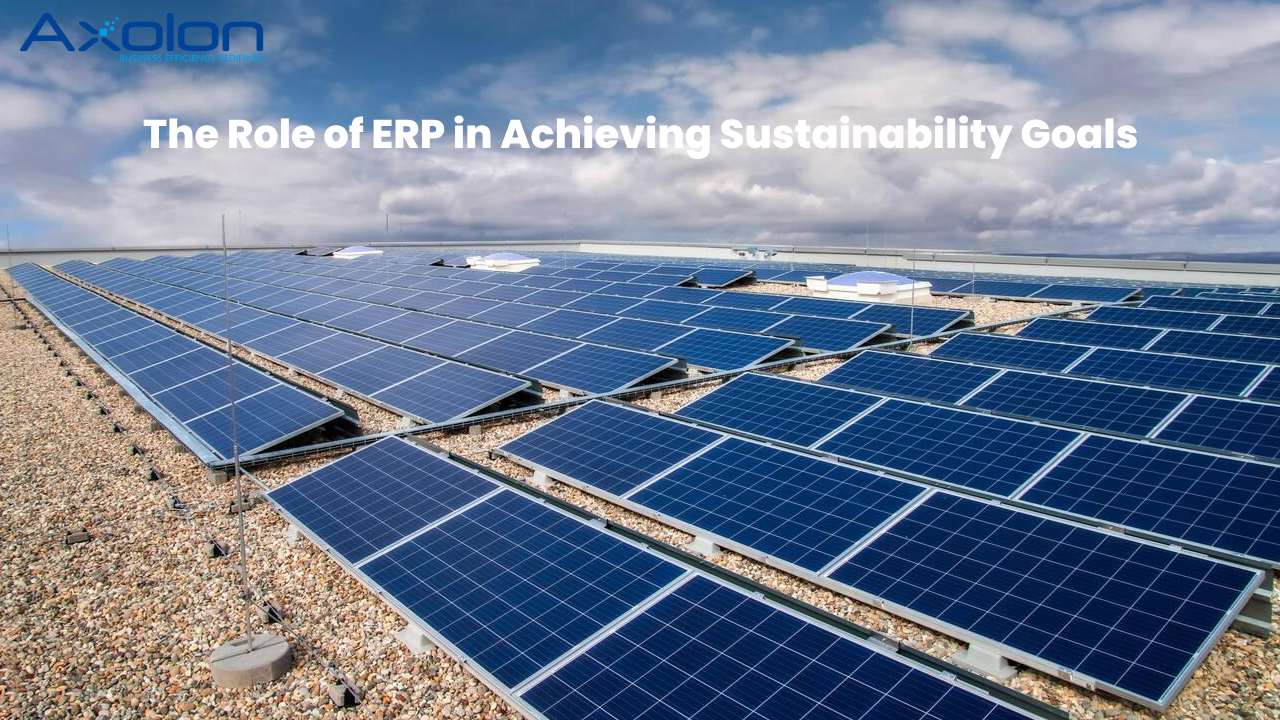
Sustainability has become a cornerstone of modern business strategy, driven by the urgent need to address environmental challenges and align with global sustainability initiatives. Companies increasingly adopt practices that reduce their environmental impact, conserve resources, and meet evolving regulations. However, achieving sustainability goals requires more than ambition—it demands precision, visibility, and control over operations. ERP (Enterprise Resource Planning) software is transformative in enabling businesses to meet these goals. By centralizing data, streamlining processes, and delivering actionable insights, ERP systems empower organizations to improve efficiency and reduce waste. ERP solutions are essential for businesses in sustainability-focused regions like the UAE and Dubai in achieving their green objectives. Optimizing Resource Usage for Environmental Efficiency One of the most direct ways ERP software contributes to sustainability is by optimizing resource usage. ERP systems provide detailed insights into how energy, materials, and other resources are consumed across operations. This visibility allows businesses to identify inefficiencies, reduce waste, and implement more sustainable practices. For example, ERP can track energy consumption across facilities, highlighting areas where processes can be streamlinedto save power. Similarly, it enables businesses to monitor material usage during production, ensuring that resources are utilized efficiently and waste is minimized. By leveraging ERP, companies can improve environmental efficiency while reducing operational costs. Enabling Transparent Reporting and Compliance Compliance with sustainability regulations and standards is a critical component of achieving sustainability goals. ERP systems simplify this process by automating the tracking and reporting of key environmental metrics, such as carbon emissions, energy usage, and waste management. With ERP, businesses can generate accurate and detailed reports that meet the requirements of international certifications like ISO 14001 or regional regulations. This transparency not only helps organizations avoid penalties but alsodemonstrates their commitment to sustainability to stakeholders and customers. By ensuring compliance, ERP software supports businesses in aligning their operations with global environmental standards. Supporting Circular Economy Practices The circular economy focuses on reducing waste by reusing, refurbishing, and recycling materials. ERP software is a critical enabler of this approach, helping businesses track product lifecycles and manage reverse logistics efficiently. For instance, ERP can monitor the return of used products, ensuring they are processed for recycling or refurbishment instead of discarded. Additionally, ERP systems provide visibility into the flow of materials, making it easier for companies to integrate sustainable practices into their supply chains. By supporting closed-loop systems, ERP enables businesses to maximize resource value and contribute to a more sustainable economy. Improving Supply Chain Sustainability A sustainable supply chain is essential for businesses aiming to reduce their environmental impact. ERP software provides comprehensive visibility into supply chain operations, enabling companies to identify inefficiencies, ensure ethical sourcing, and minimize waste. For instance, ERP systems can track supplier compliance with environmental standards, ensuring that raw materials are sourced responsibly. Additionally, ERP streamlines logistics by optimizing transportation routes and reducing unnecessary shipments, which helps lower carbon emissions. By enhancing supply chain transparency and efficiency, ERP empowers businesses to build eco-friendly operations that align with sustainability goals. Reducing Carbon Emissions with Data-Driven Insights Carbon emissions remain a major concern for businesses committed to sustainability. ERP systems help tackle this challenge by providing detailed analytics on energy usage, transportation emissions, and production processes. These insights allow companies to pinpoint carbon-intensive activities and implement strategies to reduce their footprint. For example, ERP can identify opportunities to transition to renewable energy sources, optimize production schedules for energy efficiency, or consolidate shipments to minimize transportation emissions. By leveraging data-driven insights, businesses can take targeted actions that significantly reduce their carbon footprint while maintaining operational efficiency. Empowering Workforce Engagement in Sustainability Initiatives Sustainability is not just about processes—it’s also about people. ERP software can help engage employees in sustainability initiatives by tracking participation, providing training, and monitoring the impact of their efforts. For instance, ERP systems can log employee contributions to green programs, such as recycling drives or energy-saving campaigns, and generate reports on their effectiveness. This data can be used to recognize top contributors or refine strategies for better outcomes. By fostering a culture of sustainability within the workforce, businesses can amplify their environmental efforts and ensure long-term success. Driving Innovation for Sustainable Business Models Innovation is a key driver of sustainability, and ERP systems enable businesses to experiment with and implement new, eco-friendly practices. By centralizing data and providing actionable insights, ERP helps companies explore innovative models like product-as-a-service, on-demand manufacturing, and sustainable supply chains. For example, businesses can use ERP to pilot initiatives that reduce material usage or adopt circular economy practices, such as repurposing waste into new products. These systems also support data-driven experimentation, enabling companies to test the feasibility and impact of their green strategies. With ERP as a foundation, businesses can transition to sustainable models that drive growth while minimizing environmental impact. Sustainability is no longer optional—it is a critical part of business strategy in today’s environmentally conscious world. ERP software is indispensable in achieving sustainability goals by optimizing resource usage, improving supply chain transparency, and supporting innovative practices. For businesses in regions like the UAE and Dubai, where sustainability is a growing priority, ERP solutions provide the tools to align operations with global environmental standards. By leveraging ERP, companies can reduce waste, lower emissions, and foster a culture of sustainability within their organizations. In doing so, they not only contribute to a greener future but also enhance their competitiveness in a market that increasingly values eco-conscious practices.
ERP Data Breach: Dubai’s Costly Lesson

ERP software is the backbone of modern businesses, managing critical data, finances, and supply chains. However, as organizations in UAE and Dubai increasingly rely on ERP solutions, they become prime targets for cybercriminals. A data breach can result in massive financial losses, legal penalties, and reputational damage. With cyber threats evolving, companies must prioritize ERP security to prevent data breaches. This article explores real-world ERP security failures, common vulnerabilities, and the best strategies to protect businesses in Dubai and beyond. 1. The Growing Threat of ERP Data Breaches ERP software centralizes business operations, making it a goldmine for hackers. A successful attack can expose sensitive customer information, financial records, and trade secrets. According to cybersecurity reports, UAE businesses experience frequent cyberattacks, with ERP solutions becoming a primary target due to outdated security protocols. In Dubai, high-value enterprises are particularly vulnerable to ransomware and data theft, leading to compliance fines and operational disruptions. Key factors contributing to ERP security risks: Inadequate access controls: Weak user permissions allow unauthorized access. Outdated software: Unpatched vulnerabilities make ERP systems easy targets. Third-party integrations: Poorly secured plugins create backdoors for hackers. 2. A Real-World Case: The Costliest ERP Breach in Dubai One of the most significant ERP data breaches in Dubai involved a multinational logistics company. Cybercriminals exploited weak authentication settings, gaining access to financial records and supply chain data. The breach led to: A financial loss of millions due to fraudulent transactions. Severe reputation damage, causing major clients to cut ties. Legal penalties for failing to comply with UAE data protection laws. The incident highlighted the dangers of ignoring ERP security updates and poor user authentication practices. Businesses in the UAE must learn from this case to safeguard their ERP solutions from similar attacks. 3. How ERP Software Becomes a Security Risk Many companies assume ERP solutions come with built-in security, but vulnerabilities often emerge due to mismanagement or oversight. Some of the most common issues include: Weak passwords and user credentials: Employees using simple or reused passwords make ERP systems easy targets. Lack of multi-factor authentication (MFA): Without MFA, hackers can easily break into ERP accounts using stolen credentials. Poor role-based access controls: Not limiting user permissions increases the risk of insider threats or accidental data exposure. Neglected software updates: Many businesses in Dubai and UAE delay software updates, unknowingly leaving their ERP platforms exposed to new cyber threats. 4. Regulatory Compliance and Legal Implications With strict data protection regulations, businesses operating in Dubai and the UAE must ensure compliance with local and international cybersecurity standards. Failing to do so can result in hefty fines, legal action, and a damaged reputation. Key regulations include: UAE Cybercrime Law: Punishes unauthorized access, hacking, and data theft. GDPR (if handling EU customer data): Enforces strict rules on data protection and breach reporting. Dubai Electronic Transactions Law: Governs digital business transactions and cybersecurity practices. Non-compliance with these laws can result in financial losses and even criminal liabilities for business owners and executives. 5. The Role of Cloud-Based ERP Solutions in Security With many businesses in UAE and Dubai migrating to cloud-based ERP solutions, security concerns have shifted towards cloud vulnerabilities. However, modern ERP providers implement robust security measures to minimize risks. Some of these include: End-to-end encryption: Ensuring data is protected at all times. Automatic security updates: Keeping ERP software up to date with the latest patches. AI-driven threat detection: Identifying and mitigating potential breaches in real-time. Remote access security: Enforcing VPNs, MFA, and device management for secure logins. Businesses must choose ERP vendors that prioritize cybersecurity and offer advanced protection mechanisms to prevent unauthorized access. 6. How to Secure Your ERP System To protect against potential breaches, companies must take proactive security measures. Best practices include: Implementing multi-factor authentication (MFA): Ensures that only authorized users can access ERP software. Regular security audits: Identifies vulnerabilities before hackers exploit them. Employee cybersecurity training: Educates staff on phishing scams and secure password management. Role-based access control (RBAC): Restricts users from accessing sensitive data unless necessary. Partnering with a trusted ERP provider: Vendors offering ERP software in Dubai and UAE should have a strong security track record. Dubai’s costly ERP data breach serves as a wake-up call for businesses in the UAE. The increasing reliance on ERP solutions makes cybersecurity a top priority. Companies must invest in strong security measures, choose reputable ERP vendors, and stay compliant with regulations to protect their sensitive data. By implementing proactive security strategies, businesses can safeguard their ERP systems, ensuring business continuity and maintaining customer trust. In an era of rising cyber threats, prevention is always better than cure.